

A practical, contractor grade guide to picking, sizing, and running a skid steer backhoe attachment for tight access digging, service work, and small trenching tasks. We cover when a skid steer backhoe makes sense over a mini excavator, how bucket and boom geometry affect breakout and reach, what swing arcs are realistic, how stabilizers and quick attach choices change stability and sightlines, and the operating patterns that keep production high and rework low. If you are shopping for a skid steer backhoe, a mini skid steer backhoe, or a trenching backhoe package backed by clear numbers and field technique, you are in the right place.
When a backhoe makes sense?
A backhoe attachment for skid steer loader is a purpose built tool for short digs, narrow trenches, and one day service work where transport speed, site access, and machine versatility matter more than maximum reach. You mount the boom on the universal quick attach plate, plug hydraulics, and you are digging in minutes. When the hole is done, you drop the backhoe bucket, pick up forks, a bucket, or a broom, and finish the site without waiting on a second machine.
Why not always bring a mini excavator?
Mini excavators win on reach, swing, and dedicated dig geometry, but they require another operator or another trip. On punch lists, service calls, meter pits, sign footings, and curb cut utilities, the skid steer is already there. A backhoe attachment for skid steer lets the same operator dig, set, and backfill with one carrier and one trailer.
How small jobs add up?
Many companies do ten to twenty sub hour digs a week. Bringing a second machine for each one burns hours in transport and idle. The right skid steer backhoe pays back by collapsing those moves into one mobilization while keeping the loader available for cleanup and material handling between digs.
What work should you avoid
Deep utility mains, long laterals, and broad over excavations favor a mini or mid excavator. Extreme reach around obstacles and trench shoring work also favor a dedicated excavator. The skid steer backhoe attachments are a surgical tool. Use it surgically.
Spot excavations, service trenches, and tight access
Typical jobs where a skid steer backhoe attachment shines
- Service laterals from curb to meter, shallow gas or water tie ins, and short electrical runs where a 12 to 18 inch wide trench is ideal.
- Footings for signs, bollards, small pads, light pole bases, and mailbox posts where holes are under six feet deep and movement between holes is frequent.
- French drains, downspout extensions, and landscape drainage where alignment is simple and backfill happens immediately after pipe placement.
- Valve box replacements and meter pit repairs where precise digging around utilities is mandatory and a compact stance reduces turf damage.
- Root barrier trenches and selective tree work where a narrow trenching backhoe bucket minimizes disturbance near hardscape.

Mini skid steer backhoe niche
A mini skid steer backhoe sacrifices dig depth and breakout for access. It fits through gates, works on established lawns with minimal damage, and pairs with narrow buckets that leave tiny scars. For irrigation repairs, small conduit runs, pet fence installs, and garden utilities, a mini package can be faster door to door than a full size rig and a second trailer.
Buckets, reach, and geometry
Backhoe performance lives in geometry. Dig depth is not the only number that matters. Reach at ground, reach at max depth, boom and dipper angles, curl force at the tooth, and swing arc all change what you can actually do. Understanding these numbers makes selection easier and keeps bids honest.
Reach and depth definitions
Reach at ground is the horizontal distance from the coupler plate to the bucket teeth with the boom at ground level. Reach at max depth is the horizontal distance at the deepest point you can dig while maintaining a workable curl. These two numbers define how far you can stay off a trench edge and still hit bottom safely.
Breakout and curl force
Breakout at the tooth is the force the cylinder and linkage can apply to pry into compacted soil or cut roots. Curl force is what rolls the bucket to fill and lift. If your ground is hard clay with gravel, favor models with higher breakout and thicker linkage pins over an extra six inches of theoretical depth you cannot use without stalling.
Swing options
Some skid steer backhoe attachments offer fixed center digging only. Others add a manual swing or a hydraulic swing post. A 90 to 120 degree swing arc is common. A true 180 degree swing is rare on plate mounted units and adds weight and complexity. Swing matters for trench alignment and spoil placement. If you plan to cast spoil consistently to one side, a hydraulic swing is a real productivity booster.
Bucket widths, dig depth, and swing arc
The backhoe bucket choice changes trench quality, spoil volume, cycle time, and how tidy your edges look. The right width for utilities is often driven by the pipe and bedding spec, not just how fast you can dig. Narrower is cleaner for restoration. Wider is better for production where backfill is on site and settlement tolerance is low.
Common backhoe bucket widths and where they fit
| Bucket width | Typical use | Soil behavior | Notes and keywords |
|---|---|---|---|
| 8 to 10 inches | Conduit, irrigation, dog fence wire, root barriers | Cuts clean, limited spoil volume | Mini skid steer backhoe favorite for lawns and gardens |
| 12 inches | Water services, low pressure gas, drains | Balances speed and restoration | Most requested trenching backhoe setup on residential service calls |
| 16 to 18 inches | Heavier utilities, shallow footings | More spoil, better room for compaction tools | Skid steer backhoe attachment sweet spot for mixed work |
| 24 inches and up | Footings, pits, over excavations | Max spoil, needs stabilizers and careful staging | Use when restoration tolerance is generous |
Dig depth ranges you can trust
- Mini skid steer backhoe attachment: 48 to 72 inches at the tooth depending on model, excellent visibility, modest breakout.
- Standard plate mount skid steer backhoe: 78 to 120 inches to tooth on full size carriers, stronger breakout, more swing options.
- Telescopic or extended dipper options exist but add weight and complexity. Consider only if your most common task needs that extra foot regularly.
What swing arc means on site?
A 90 degree swing arc lets you place spoil to either side with repositioning. A 120 degree arc improves side casting and keeps spoil out of the travel lane. If you are placing spoil into a small dump trailer or a tight pile, more swing is smoother. If you are trenching long straight runs with plenty of room, fixed center digging with periodic machine moves is fine.
Hydraulics, stability, and visibility
Unlike motor driven attachments, backhoes rely on cylinder circuits rather than high speed rotary work. Flow and pressure still matter because they set response and curl speed. Stability and sightlines are just as important because you are often digging very close to the machine.
Hydraulic realities
- Standard flow is the norm. What matters is clean, unrestricted flat face couplers and healthy auxiliary pressure for snappy cylinder response.
- Hose routing must be sleeved and anchored so the boom or swing post does not pinch or rub during tight maneuvers.
- Many packages include their own valve stack and joystick or pedestal controls. Others rely on the loader auxiliary and use pilot valves on the attachment. Test both styles for comfort.
Stability basics
- Keep the loader low, park on firm ground, and use stabilizers whenever digging past half depth. A small lean becomes a big positional error at the tooth.
- Track loaders feel calmer than wheeled skids on uneven soils. If you run wheels, set tire pressure correctly and avoid cross slope digging at max reach.
- Avoid prying with the loader arms. Let the backhoe bucket and boom do the work while the plate stays square on the quick attach.
Visibility and line of sight
- Open backhoe frames with low head tubes give better sight to the trench line. Solid plates hide teeth and create guesswork near utilities.
- Seat position varies. Some units offer a flip over operator seat on the attachment. Others keep you in the loader cab running joysticks. Pick what keeps your eyes naturally on the trench without twisting.
- Work lights on the boom and a camera aimed at the bucket help for dusk and interior digs. Protect wiring from snags with spiral wrap.
Stabilizers, quick attach, and boom control
Control and comfort decide whether an average operator digs straight and clean. Stabilizers, the mounting plate, and valve feel change that control more than spec sheets suggest.
Stabilizer styles and why they matter
- Flip down pads are light and fast. They are enough for narrow trenching and shallow pits on firm soils.
- Telescoping outriggers with wide pads are heavier and hold line on deeper trenching in mixed soils. They also reduce pitching when you curl full buckets at reach.
- On mini skid steer backhoe units you may get skids or a single center stabilizer. Avoid overreaching with these. Move the machine more often and keep your cut conservative.
Quick attach fit and frame stiffness
- Plate fit should be tight with positive pin engagement. Any slop translates into choppy cuts and exaggerated tooth movement in hard ground.
- Stiff frames resist twist when you side load with a swing. Thin head tubes and small pin bosses invite flex and early bushing wear.
- If the attachment includes a subframe that ties into the loader arms or a chassis saddle, use it. Spreading loads keeps the plate and ears alive.
Valve stacks and joysticks
- Backhoe pattern controls feel natural to excavator operators. Some models can flip pattern. Make sure the pattern is labeled clearly and locked to avoid surprises.
- Feathering matters for utility work. Test for smooth starts and stops rather than on off jerks. A good valve stack saves sod and utilities.
- A hydraulic thumb on the dipper transforms the tool for rocks and roots. If you handle irregular pulls often, spec a thumb from day one so hoses, guards, and levers are set up correctly.
Setup, transport, and jobsite logistics
Mounting and test
- Inspect the plate, pins, and latch before hookup. Clean flat face couplers and verify o rings. Dirty couplers slow response and cut cylinder life.
- Cycle boom, dipper, bucket, and swing slowly to purge air and confirm hose length at extremes. Add sleeves wherever hoses scuff a frame edge.
- Check stabilizer pads for tight hardware and clean surfaces so they do not skate on concrete or turf.
Transport
- Use rated lugs to chain the attachment. Do not strap over cylinders or valve bodies. Cap couplers and stow hoses so dust stays out.
- Place heavy buckets low on the trailer and bind them separately. A loose backhoe bucket becomes a projectile when you hit a pothole.
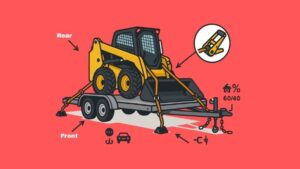
Staging tools
- Carry at least two backhoe buckets on mixed jobs. A 12 inch trenching bucket for pipe and a 18 or 24 inch for pits covers most tasks.
- Stage a compactor, bedding material, and a cleanup bucket within a short walk. The whole advantage of a skid steer backhoe is fast sequencing. Do not waste it with long walks for gear.
Operating technique that boosts production
Establish the line
- String line, paint, or a shallow saw kerf keeps your trench straight. On lawns use flags to mark sprinkler heads and low voltage lines.
- Start with a short leader cut to set depth and test soil behavior. Adjust bite and stabilizer load before you commit to long pulls.
Cut and cast rhythm
- On fixed center units, work a consistent 5 to 7 foot segment, back the machine one wheel length, reset, and repeat. Rhythm beats speed.
- On swing post models, bias spoil to the same side for easier cleanup. Keep the spoil ridge one bucket width from the trench so it does not cave back.
- Feather the last inch of each pass and finish depth with the flat of the backhoe bucket so bedding thickness is consistent.
Roots and cobbles
- Switch to a narrow trenching backhoe bucket on roots and rock so your bite stays controlled. Use the curl to cut rather than prying with the boom extended.
- If you run a thumb, set the rock on the bank, then resume. Do not chase a rolling cobble down a trench. It wastes time and scars edges.
Backfill and compact
- Backfill in lifts the same day if possible. Your skid steer can switch to a bucket in minutes. Short timelines are the reason you chose this package.
- Compact around services with a jumping jack or narrow plate. Finish with topsoil and the bucket heel for a clean grade.
Safety, underground, and housekeeping
Utility locates and hand exposure
- Call locates and pothole by hand as required. A clean window to the utility saves claims and keeps the job moving.
- Use a spotter on busy sidewalks and drives. Skid steers hide pedestrians and cyclists at the corners of attachments.
Trench edges and support
- Keep the machine back from trench edges at least the depth of the trench when soil is questionable. A small cave can tip a light machine fast.
- Shore if required by depth and soil type. A skid steer loader backhoe attachment does not change trench safety rules.

Housekeeping
- Track mats at curbs reduce gouging. Sweep track out with a broom before you leave. Neighbors notice cleanup first.
- Keep spoil piles tight. Windrows across sidewalks and drives invite complaints and slips.
Alternatives to compare
Mini excavator
Best for depth, 360 degree swing, and complex trench routing. Requires second machine or second trip. If your work is more dig than anything else, the mini is the base machine and the skid steer is the extra, not the other way around.
Auger and trenching chain
An auger attachment drills clean holes fast for posts and footings but does not trench. A chain trencher cuts long, consistent trenches in uniform soils but struggles in cobble and roots. For irrigations and dog fences a chain trencher can beat a backhoe on speed. For mixed soils and tight pits the backhoe bucket wins.
Hydraulic breaker plus bucket
For frost or hardpan the breaker opens a slot that a backhoe bucket clears. If frost depth is serious or rock is constant, plan breaker first, backhoe second, or bring the mini excavator.
Vacuum excavator
Non destructive digging for utility exposure. Slower on bulk trenching but mandatory near critical fiber or gas where risk tolerance is zero. Pair vac with a skid steer backhoe for bulk after you expose the corridor safely.
Selection cheat sheet
| Work profile | Attachment pick | Bucket width | Swing | Stabilizers | Notes and keywords |
|---|---|---|---|---|---|
| Residential water and gas services under 6 feet | Skid steer backhoe attachment | 12 inches | Hydraulic 90 to 120 deg | Telescoping pads | Trenching backhoe with thumb if roots are common |
| Meter pit repairs and valve boxes | Mini skid steer backhoe | 8 to 10 inches | Fixed center | Skids or small pads | Minimal turf damage and fast in tight gates |
| Sign footings and bollards | Skid steer backhoe | 16 to 24 inches | Manual or hydraulic swing | Wide pads | Backfill same day using the loader bucket |
| Landscape drains with mixed roots | Skid steer backhoe with thumb | 12 inches | Hydraulic swing | Telescoping pads | Backhoe bucket with sharp tooth profile to cut roots clean |


FAQ
Are backhoe attachments universal on skid steer?
Backhoe attachments are not truly universal, even though many skid steers share a common quick-attach plate. You still have to match the mounting style, hydraulic flow and pressure, and machine size to the backhoe’s requirements, so always confirm compatibility with the skid steer and attachment manufacturer before buying.
How relieve pressure in skid steer backhoe attachment?
To relieve pressure, park the skid steer on level ground, shut the engine off, lower the attachment to the ground and move the backhoe and auxiliary hydraulic controls through all directions to bleed off trapped pressure. Once everything is relaxed, carefully crack the quick couplers or use the built-in pressure relief button (if equipped), always following the operator’s manual and wearing eye and hand protection.
How to convert skid steer backhoe to swing?
Turning a rigid skid steer backhoe into a swing type is not a simple modification. it usually needs a dedicated swing frame, pivot, cylinders, valves and plumbing that are engineered as a system. In reality, the safe options are to install an OEM swing kit made for that exact attachment (if one exists) or replace it with a purpose-built swing backhoe, since homemade conversions can overstress the boom, mount and hydraulics.
Is backfilling with a skid stee faster than a backhoe?
In many site conditions a skid steer will backfill faster, because it can carry a wider bucket, turn quickly and make repeated passes without repositioning the machine much. A backhoe can be slower for pure production backfilling, but it wins when you need reach, dumping over obstacles or working in tighter trench lines where the skid steer cannot safely work.
Is a skid steer backhoe attachment as fast as a mini excavator?
It is not on long trenches or deep digs. It is competitive on short runs, pits, and utility repairs where mobilization and sequencing matter more than maximum reach. If you will dig for hours without needing other tools, the mini excavator wins. If you will dig for minutes then switch to forks, a bucket, and a broom, the skid steer backhoe keeps your day tight.
Do I need hydraulic swing on my skid steer backhoe
If you place spoil consistently to one side or work near fences, hydraulic swing saves time and reduces repositioning. If most of your cuts are straight with space on both sides and you are comfortable bumping the machine forward often, a fixed center or manual swing unit is fine.
What bucket sizes should I buy first?
Start with a 12 inch trenching bucket and a 18 or 24 inch general bucket. The 12 handles most service work. The wider bucket handles pits, footings, and repairs that need elbow room for compaction. Add an 8 or 10 inch only if you do a lot of irrigation or low voltage work where narrow cuts matter.
Can I run a skid steer backhoe on standard flow?
Yes. Cylinder work does not demand high flow like a planer or mulcher. The feel of the valves, the quality of the couplers, and the absence of restrictions make more difference than headline GPM. Keep couplers clean and hoses in good shape for crisp response.
Will a mini skid steer backhoe handle six foot depth?
Some will reach that number at the hinge pin under ideal geometry, but working depth at the tooth is often less. If six foot bottoms are common in your work, test a full size skid steer backhoe attachment on your carrier or plan to bring a mini excavator when depth is non negotiable.
How close can I dig to a wall or foundation?
Reach at ground and linkage geometry decide this. Many plate mount units let you work within a couple of feet of a vertical face with a narrow bucket by curling and lifting rather than pushing straight. Practice on spoil piles before you attempt delicate work near structures.
Is a hydraulic thumb worth the cost?
If you pull rocks, roots, or old pipe weekly, yes. A thumb eliminates hand time in the trench and gives you real control of odd shapes. If your work is pure trench and backfill with uniform soils, you can skip the thumb and put the budget into stabilizers and valve quality.
What maintenance matters most on a skid steer backhoe?
Pin and bushing lubrication, hose protection, and keeping the valve stack clean. Check bucket teeth and side cutters, torque critical bolts weekly, and touch up paint on the plate and ears so rust does not creep into fits. Replace worn stabilizer pads before they skate on concrete.
How do I keep trenches straight without a full 180 degree swing?
Use string lines, paint, and short consistent machine moves. Keep your stabilizers equally loaded, and correct any drift immediately instead of trying to steer it back over ten feet. Short segments with clean resets are faster than long wavy cuts you fix later.