

If your skid steer loader is the hand, the bucket is the fingertip. It is the part that touches soil, gravel, snow, and debris on every shift. Pick the wrong skid steer bucket and you drag the whole operation down with spilled loads, bent cutting edges, and a machine that feels nervous with a heaped pile held high. Pick the right skid steer loader bucket and the same machine turns fast, accurate, and profitable. This guide explains bucket families, real sizing rules, stability with heavy tools, prices that make sense, and the accessory ecosystem that turns one bucket into a system you can maintain and transport without drama.
Bucket families and where each shines
Every catalog calls different models by different names, but the work decides the family. A skid steer bucket or skid steer loader bucket is either meant to dig, carry and shape, screen and sort, or move light volume fast. When you strip away paint, the geometry tells you how it will behave. Floor length sets how the load sits against the back. Side height and profile define how much rollback you get before spillage. The cutting edge or teeth tell you how it bites and how much abuse it can take. Ask yourself what you do eight days out of ten. Are you digging and shaping dense material, moving a lot of light product, or separating rock from fines before loading?
Digging and shaping focus
General purpose dirt buckets, smooth edge finish buckets, and tooth options that pry. These are the daily drivers for landscape and site work. A skid steer dirt bucket with a smooth edge leaves fewer scars when back dragging, while a skid steer tooth bucket cuts roots and hardpan when you need bite.
Volume and speed focus
High capacity and light material buckets that trade bite for big heaped volume. A large skid steer bucket with a tall back and extended floor moves mulch, snow, and grain fast but demands stability discipline on rough lots.
Sorting and cleanup focus
Rock and skeleton buckets that drop fines and keep coarse material. A skid steer material bucket in this family may use bars or punched plate to screen as you travel, cutting passes and dump cycles on cleanup jobs.
You can do almost anything with a plain general purpose bucket, but you cannot do everything well. Let the material decide the family. Then let the machine decide size.

Dirt general purpose smooth and tooth options
If most of your week is cutting tops, moving spoils, shaping pads, and cleaning edges, a dirt or general purpose bucket is home base. Models vary by side height, floor length, and edge type. A skid steer smooth bucket is the right call when you back drag daily across driveways and sidewalks and you want a clean finish without tooth marks. A skid steer digging bucket or skid steer tooth bucket gives you bite when you hit compacted gravel or roots, but it will leave tracks when you pull back across finished ground. Some crews keep both and swap in sixty seconds because smooth edges shine when you shape and teeth shine when you pry. If you only budget for one, buy smooth and add a bolt on tooth bar for seasonal bite. Remove it when you finish grade.
- General purpose buckets are usually low profile or standard profile. Low profile improves sightlines to the cutting edge for precise feathering near concrete. Standard profile holds a touch more volume and stands taller for carrying distance.
- Look for a reinforced heel and wear strips under the floor. Dragging across asphalt or stone without wear strips eats through steel faster than you think.
- Ask if the cutting edge is single or double bevel and whether it is reversible. A reversible edge doubles the life for not much extra money.
High capacity light material and oversized buckets
When people say high capacity skid steer bucket, they mean light materials moved far and fast. Mulch, snow, wood chips, grain and trash are the classics. These buckets stretch the floor, raise the back, and often flare the sides. That geometry catches big volume then encourages flow on the dump. The tradeoff is weight and center of mass. A high capacity or oversized skid steer bucket needs a loader with the right rated operating capacity and enough hydraulic calm to lift and roll without feeling twitchy. For snow, watch for rolled tops that prevent snow from rolling over onto the cab. For grain and mulch, a taller back helps keep the operator dry and reduces product loss in a crosswind.
- Oversized buckets are not for dense aggregates. Do you plan to scoop wet sand or three quarter stone with that extra wide bucket?
- Snow work benefits from rolled top lips and side markers so operators can see edges in low light. If you plow and stack, a bucket that heaves big volume can still push like a blade on short runs.
- For recycling and transfer stations, light material buckets often need heel plates and extra gussets. Look for cross tubes that tie the side plates together at stress points.
Rock skeleton and material buckets
Rock and skeleton buckets do one thing that saves time. They separate as you travel. If you clear lots with mixed debris, a skeleton pattern lets soil fall and keeps cobbles, brick, and trash in the pan. Bar spacing is the primary tuning knob. Tight spacing holds smaller rock but drags more soil along and fills faster. Open spacing lets more fines escape but you will leave some rock behind unless you make a second pass. The frame must be stout because point load when you pry under a buried rock is brutal. For screened topsoil or recycling, a material bucket with punched plate or replaceable screens can be the right compromise. It will not win a beauty contest for finish work, but it reduces total passes and dump cycles across a day.
- Pick side plate thickness and cross tube placement that resist twist. A bent skeleton becomes a poor screen and a poor bucket on the same day.
- Think about weight. A big skeleton bucket can weigh as much as a general purpose bucket once you add guards. That eats ROC before you add material.
- If you spread stone with a skeleton, check that the front bar tips are wear protected. Replaceable wear caps extend life where abrasion is worst.
Sizes capacity and fitment that actually work
Sizing a skid steer bucket is not about buying the biggest width your quick attach will lift in a parking lot. It is about matching width to tire or track stance, matching heaped capacity to what the loader can safely lift and roll back, and matching the floor length to your grading style. Two buckets with the same nominal width can behave very differently once you heap a wet load. You need rules you can use on the yard and on the trailer, not marketing numbers that ignore real material density.
| Loader class by rated operating capacity | Typical matched bucket width | Heaped volume guideline | Notes |
|---|---|---|---|
| Up to 1800 lb ROC mini and small frame | 60 to 66 inches | 0.4 to 0.6 yard for dirt | Keep floor short for control and sightlines |
| 1800 to 2400 lb ROC mid frame | 66 to 72 inches | 0.6 to 0.8 yard for dirt | 72 inch low profile is a balanced daily driver |
| 2400 to 3200 lb ROC large frame | 72 to 78 inches | 0.8 to 1.0 yard for dirt | Consider taller sides if you carry distance |
| 3200 lb ROC and up heavy large frame | 78 to 84 inches | 1.0 to 1.25 yard for dirt | Heavier buckets need counterweight strategy |
Those ranges are not law. They are a starting point you can test on your lot. A skid steer bucket size that feels fine with mulch will feel nervous with wet clay because the density doubles. The same skid steer bucket capacity feels very different when you are carrying low across a flat lot versus lifting high next to a dump bed with ruts under the tires. If you are buying one bucket for everything, aim a little conservative so you do not burn time or risk a tip when conditions change.
Match width to the outside track or tire width so you can finish to the edge of your path without leaving a ridge. If your bucket is narrower than your stance, your second pass always turns into three.
Width match heaped volume roll back and tip angles
Width match should be boring. Your bucket should match or slightly exceed your track width so your edge lines up with your tires when you finish to a wall. That prevents ridges and keeps pass counts honest. Heaped volume is the bigger trap. Heaped is not the same as struck level. Manufacturers rate buckets with a standard heap profile, but your operators push that edge higher when they are in a hurry. You need enough rollback to hold that heap when you hit a bump. Tip angle at full height decides whether you clear tall sides without showering the cab. Check the rated dump clearance and dump reach at height for the loader, then test with your likely bucket. All of this is why the same width with a longer floor can still spill more, even though the spec page shows a bigger number.
- Test rollback at height with the bucket you plan to buy. Lift to hinge pin height and tilt all the way back. If you spill when you tap the lift sticks, your floor could be too long for the work you do.
- Tip angles that look fine on paper feel tight near a dump bed if the site is rutted. Mark a line on a wall at bed height, then repeat the test on crushed stone with your typical tires or tracks.
- A low profile bucket with a short floor keeps the cutting edge close to the front of the machine. Operators feather better and spill less when they can see the edge at all times.

Teeth edges adapters and wear parts planning
Every cutting edge is a wear part. If your supplier cannot ship edges fast and you do not have a plan to flip or change them without killing a half day, you just volunteered for downtime. Bolt on edges protect the base edge and let you rotate or replace quickly. Weld on teeth are still common on digging buckets because they transfer force better and take shock, but they slow swaps. A bolt on tooth bar converts a smooth edge into a tooth profile in minutes and takes the beating instead of your base. For crews that bounce between finish work and ripping, this flexibility is worth the small cost premium.
| Wear strategy | Pros | Tradeoffs | Best use |
|---|---|---|---|
| Reversible bolt on edge | Double life, fast change, protects base | Small weight increase, hardware to maintain | General purpose and finish work with back dragging |
| Weld on teeth and adapters | Strong bite, resists shock, durable in rock | Swap time, welding skill needed for repair | Digging hard ground, roots, concrete rubble |
| Bolt on tooth bar | Quick convert from smooth to teeth | Less aggressive than dedicated tooth bucket | Mixed landscape days with occasional ripping |
| Heel and side wear plates | Save the shell where abrasion is worst | Weight adds up, may affect balance | Asphalt yards, stone yards, recycling floors |
Some vendors market a 3 in 1 skid steer bucket. Usually that means one bucket doing three jobs such as loading, light dozing, and back dragging. On paper it sounds like magic. In practice it is a geometry compromise. If you want a true clam function, look at dedicated clamshell or 4 in 1 style tools, then re check loader weight and center of gravity at full curl. The theme does not change. Geometry first, then wear parts, then purchase price.
Weight ratings and loader stability with heavy buckets
How much does a skid steer bucket weigh and why does that matter? The answer changes with shell thickness, edge style, wear plates, and width. A basic sixty six inch low profile general purpose bucket can weigh a few hundred pounds, while an eighty four inch heavy duty rock bucket can weigh close to a thousand pounds or more before you add material. That empty weight comes directly out of your rated operating capacity. If you buy an extra stout shell and then bolt on a heavy tooth system and heel plates, do not be surprised when the loader feels light in the rear with a heaped load at half lift.
- Balance lives at carry height. If the machine feels light in the rear when you turn at speed with a heaped load, your bucket may be too heavy or too long for your frame.
- Counterweights help, but they do not fix a geometry mismatch. Do you really need that much steel for your daily material or did you overbuy because the heavier model looked stronger?
- Tracks add calm at height because of stance and compliance. Tires are quick in tight lots but feel nervous when you combine long floors with tall side profiles and wet material.
Rated operating capacity is half of tipping load on many machines. It is a lab number. Your work is not a lab. Test with the heaviest real material you move and the longest run you make, not just an empty bucket in a showroom.
Market pricing and where to buy with confidence
Prices swing with steel, freight, and brand. A good way to shop a skid steer bucket for sale is to decide your family, size, and wear strategy first. Then get two or three quotes with the same specification. That means same width, same steel thickness, same edge type, same wear plates, and same mounting style. If one vendor is much cheaper, check the details. Is the edge reversible or single sided? Are wear strips included? Is the quick attach face plate a full width weldment or a lighter duty assembly?
- Local dealer or specialty bucket shop pricing is higher than online. The difference can be worth it when something bends or a weld cracks and you need someone to own the problem.
- For skid steer bucket with teeth for sale, verify the tooth brand and series. Teeth availability matters when you need replacements in a storm week.
- If you buy online, request the shipping weight and photos of welds and inside corners. Smooth inside corners with generous gussets are a good sign.
Used buckets can be smart buys if you can see the edge life and shell integrity. Look at the bottom from the side. A banana shaped floor means it saw a lot of back dragging without wear plates. Look at the mount ears and the quick attach plate for cracks. Many cheap used buckets have bent side plates near the front corner from ramming curbs. If you see daylight where there should be flat planes, pass or price accordingly.
| Where to buy | Upside | Watch outs | Best fit |
|---|---|---|---|
| Local dealer network | Support, warranty, parts, advice | Higher ticket, lead times in season | Fleets and contractors that value uptime |
| Specialty fabrication shop | Custom steel thickness and features | Price volatility with steel costs | Unique specs, heavy duty rock or skeleton builds |
| Online marketplaces | Price competition and fast ship | Spec mismatch, unknown weld quality | Simple GP or light material buckets with clear return terms |
| Auctions and used | Deep savings | Hidden fatigue and warped floors | Backup tools, seasonal snow buckets |
If you search skid loader buckets for sale or skidsteer bucket for sale and you see a list of look alike options, build a short checklist you can run in five minutes. Confirm width, floor length, shell thickness, edge type, wear strips, mount style, and weight. If any two listings do not line up for at least five of those, you are not comparing equals.

Accessory ecosystem and transport
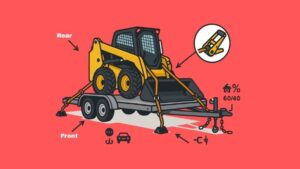
Think beyond the shell. A bucket’s value multiplies when you plan the accessory ecosystem. Spare edges and teeth, bolt on tooth bars, heel plates, side cutters, and wear strips are the first layer. Quick pin kits for edges and tooth systems save time in the yard. For transport, a bucket dolly or a simple forkable stand keeps heavy buckets from chewing your trailer deck or rolling around. Many crews keep a short 4 by 4 cradle so the cutting edge sits on wood, not steel. That protects both parts and keeps chains from getting pinched under the lip.
- Skid steer bucket attachments include tooth bars, side cutters, spill guards, and even level gauges. Most add a little weight and a lot of convenience when used correctly.
- If you run a fleet of similar loaders, standardize on edge width and hole patterns so your spare edges fit all buckets. That is how you turn a truckload of parts into uptime.
- Label each bucket with width and weight using paint pen on the back. Crews make better picks at 4 a.m. when the numbers are obvious.
Transport discipline prevents more damage than any single reinforcement. Strap the bucket at two points, protect the cutting edge with wood, and avoid stacking on hoses or couplers when you load other tools next to it.
FAQ
How many yards is a skid steer bucket?
There is no single standard size: most general purpose skid steer buckets run roughly from about 0.3 to 1.0 cubic yards, while large high capacity or light material buckets can be 1.5 yards or more. To know for sure on your machine, check the bucket tag or the manufacturer’s spec sheet, which lists struck and heaped capacity in cubic yards.
How much does a skid steer bucket weigh?
Bucket weight is all over the map, but a typical 60–72 inch general purpose skid steer bucket usually falls somewhere around 400 to 800 pounds. Heavy duty rock buckets, high capacity or wider specialty buckets, especially with bolt-on edges or teeth, can easily push past 1,000 pounds, so you always want to check the specific attachment tag or spec sheet when you are doing transport or lift calculations.
How much does a skid steer bucket of dirt weigh?
A skid steer bucket of dirt often comes in somewhere around 1,000 to 2,000 pounds for a typical 0.5 to 0.75 cubic yard bucket of moist soil. The exact weight depends on bucket size and material density, so a full 1 cubic yard bucket of wet, heavy dirt can easily climb into the 2,500 pound range or more.
How wide is a skid steer bucket?
Most common skid steer buckets fall in the 60 to 80 inch range, with 66 and 72 inches being very typical on mid size machines. You will see narrower 48 to 60 inch buckets for tight work or high flow attachments and some light material buckets stretching out to 84 inches or more, so the tag or spec sheet for that specific bucket is the only way to know the exact width.
Are skid steer buckets universal?
Not exactly. Many modern machines use a common skid steer quick attach pattern, so a lot of buckets will swap between brands, but older models, mini skid steers and some proprietary couplers do not match. You still need to confirm the mount style, width and weight rating with both the bucket and machine specs before assuming it is “universal.”
How to change bucket on skid steer?
On most modern skid steers, you start by setting the bucket flat on the ground, lowering the arms to remove pressure, then unlock the quick attach levers and slowly back the machine away. To install the new bucket, drive up and square the mounting plate into the receiver, curl the coupler fully, lock both levers or pins, and give the bucket a few test curls and lifts to be sure it is properly seated before working.
How do I choose between a smooth edge and a tooth edge for one bucket?
If you finish grade on hard surfaces three days a week, buy a smooth edge with a bolt on tooth bar you can install for ripping days. If you mostly pry and dig in compacted soil, buy a tooth bucket and add a bolt on reversible edge for cleaner back dragging when you need it.
Is a larger high capacity bucket safe on a mid frame loader if I only use it for mulch?
Yes if you validate stability when the bucket is heaped and rolled back at carry height and at full lift near a truck bed. Try it with a full load on rutted ground. If the rear feels light, it is not safe for your routes even if the spec sheet says the capacity fits.
Do rock and skeleton buckets replace a general purpose bucket?
No. They complement it. Skeletons are great for cleanup and sorting but they do not carry fines well and they do not leave a clean finish on pads or driveways. Keep a general purpose or low profile with a smooth edge for finish work.
What is the best width for a loader that runs both tires and tracks?
Match the widest stance you run most often. If tracks are your default, match the track width so you do not leave ridges. If you switch a lot, go slightly wider than the tire stance so you still finish to the edge when on rubber.
Should I buy an oversized bucket for snow and use it for soil in summer?
It is better to own a purpose built snow or light material bucket and a general purpose dirt bucket. Oversized light material buckets feel awkward with dense soil and can overload the machine. If budget forces one, size conservatively and accept that summer production will not be ideal.
Are 3 in 1 buckets a good substitute for multiple dedicated tools?
They solve light dozing and carry in one tool but they will not dig or finish as well as a dedicated bucket. If you need clam function regularly for backfilling or material handling, look at a dedicated clam or 4 in 1 design and recheck your loader’s balance at height.
How can I quickly estimate if a bucket is too heavy for my loader?
Subtract empty bucket weight from rated operating capacity to find your payload margin. Then estimate material weight by density times heaped volume. If that number is close to the margin, expect poor feel on rough ground and keep the load low. If it exceeds the margin, go down a size or a duty class.
What should I inspect on a used bucket before paying?
Check the floor for banana shape, the heel for wear through, the side plates for bulge or twist, the quick attach plate for cracks at welds, and the edge for remaining life. Lay a straight edge under the floor to spot bowing. If the edge is welded to a thin base with no bolts left, price it as a core only.
Does a taller back always mean more capacity?
No. Floor length and side shape matter as much as back height. Some tall backs are there to reduce spill on light material, not to increase struck volume. Look at heaped and struck ratings together and compare floor length to see the full picture.
Where should I buy a bucket when I do not have time to shop around?
Call your dealer for an in stock general purpose or light material bucket in the width you need and ask for reversible edges installed. If you need a skeleton or a custom build, a specialty fabrication shop will guide thickness and bar spacing and deliver something you will not regret.