
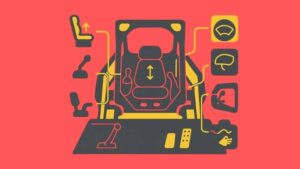
A practical, field tested playbook for setting up controls, mapping functions, and arranging the cab so operators run longer with less fatigue and better precision. If you teach new hires, move between brands, or jump from forks to planers to mulchers in the same day, this guide turns guesswork into a repeatable setup you can standardize across your fleet.
Control schemes and the learning curve for crews
Every operator learns a pattern first and everything else second. That is why standardizing your layout pays more than any single attachment upgrade. Most modern loaders ship with selectable patterns. The two you will see are ISO vs H pattern. Which one should your team use?
ISO vs H pattern in plain language
ISO puts drive on the left joystick and loader functions on the right joystick. H pattern splits drive and loader across both sticks so each hand does some of both. If your crew moves between skid steers and compact track loaders with grade control, ISO usually wins because it matches excavator logic more closely for the right hand.
Where H pattern still makes sense?
Legacy fleets, long time operators, and tight pallet work sometimes favor H pattern because muscle memory is locked in. If you inherit H pattern experts, do not force a switch on the first day. Train a clean handoff plan so nobody jumps in a new machine and surprises themselves at a dock door.
Skid steer joystick hardware and feel
Two families dominate control hardware. EH controls use electrohydraulic valves with software that interprets joystick inputs and sends commands. Pilot controls route low pressure oil from the joystick to proportional valves without software in the middle. EH controls are easy to tune and integrate with programmable features. Pilot controls feel buttery smooth to some hands but offer less button logic for modern attachments.
Why the learning curve matters to your margins?
- Shorter time to competence reduces bent forks, tipped pallets, and damaged edges at the jobsite gate.
- Attachment productivity rises when an operator never hunts for a function. Put common functions on the same physical button location across the fleet.
- Safety improves when emergency stops and float are muscle memory. End of day nerves fade when hands are not fighting the machine all shift.
| Decision | Pick | Why it helps | Notes |
|---|---|---|---|
| Pattern | ISO for new crews | Faster cross training from excavators and CTLs | Keep one H pattern unit if veterans insist |
| Hardware | EH controls on main fleet | Tunable, supports programmable joystick logic | Pilot controls okay for simple yards |
| Consistency | Same button map on every loader | Fewer mistakes in the dark or rain | Label with engraved caps, not stickers |
Sensitivity, detents, and response tuning
Modern machines let you shape how the sticks respond. That is where joystick response skid steer tuning becomes the difference between shaky pallets and calm fork tips. Control sensitivity skid steer settings should not be one size fits all. Set them per task and per operator profile.
Practical tuning workflow
- Set drive response to medium for most jobs. High feels fast but introduces oscillation on forks and buckets. Low feels safe but wastes time.
- Set lift and tilt to high deadband with moderate ramp. This keeps small bumps from jiggling forks yet delivers quick response when you commit.
- Set auxiliary rollers to a linear curve for planers, blowers, and mulchers. A strong initial ramp can bog motors at bite in.
- Enable float detent only after your operator demonstrates clean backdrag habits. Overuse of float on curbs leads to edge damage.
Detent behavior you should know
- Auxiliary detent locks flow for steady heads like angle brooms and snow blowers. Teach operators to cancel detent before they dismount so hoses do not pressure spike at shutdown.
- Float detent lets the boom follow grade. Use for backdragging and snow cleanup. Avoid float on uneven gravel where bucket edges catch and chatter.
- Auto level or return to dig saves time when cycling pallets. Tune the stop point to match your fork heel so you do not chase the sweet spot all day.
If a loader feels twitchy after a service visit, check that the right profile is active. EH controls often revert to a default map after software updates.
Cab layout that reduces fatigue and increases precision
Precision starts with comfort. A heated cab skid steer setup, an air ride seat, and smarter storage cut micro fatigue that turns into big mistakes at 4 PM. Visibility skid steer upgrades keep tips and edges in sight without neck strain.
Seat, armrests, and posture
- Set air ride seat height so hips and knees are level. Tilt front slightly upward to keep low back supported on long days.
- Adjust armrests so forearms lie flat with wrists neutral on the sticks. If elbows float, hands overcompensate and shake shows up at the tips.
- Move the seat fore and aft until shoulders stay against the backrest during a full curl. If you lean forward to curl, you set yourself up for soreness.
Cab climate and airflow
- Use preheat or remote start to defog and warm the cab. A heated cab skid steer keeps hands relaxed and reduces grip force, which improves finesse.
- Aim vents at the side glass and hands, not at eyes. Dry eyes reduce depth judgment in low contrast snow and dust.
Storage and small tools
- Mount a small magnetic tray for pins, coupler caps, and utility flags. Lost caps turn into dirty couplers and lazy hydraulics.
- Add a document sleeve for site maps and utility locate drawings. Hunting for paper in a wet jacket is how lines get cut.
Defrost, wipers, mirrors, camera, and lighting
Seeing well is not a luxury. It is the root of clean work and lower insurance claims. Setup that supports windshield defrost skid steer performance in January and glare control in July pays every day.
Defrost and wiper strategy
- Use a fresh cabin filter and clean defrost ducts at the start of winter. Weak airflow makes heaters look bad.
- Install a wiper kit skid steer upgrade with a long blade and a reliable washer pump. Aim spray to the blade pivot so salt lines clear at the arc start.
- Use winter washer fluid that does not smear on poly doors. Keep a spare jug in the cab to avoid running dry mid route.
Mirrors and cameras
- Fit convex mirrors high at the rear pillars to check corners while backing. Clean them daily like a windshield.
- Add a rear camera skid steer kit with a hood so snow and rain do not stick. Route the harness inside guards, not across the quick attach.
Skid steer lighting for real jobs
- Front LEDs with a warm color temperature reduce glare on snow. Cold blue light looks bright but hides contrast.</ li>
- Mount boom work lights on the upper frame angled down at the attachment. Light the work, not the dust cloud.
- Add side floods for edging and sidewalk passes. Good light stops curb rash and hydrant kisses.

Visibility hacks and low cost add ons
Small tweaks unlock big confidence. A sightline kit skid steer setup can be as simple as paint marks or as fancy as laser guides.
Simple wins
- Paint a thin line on bucket side plates at grade. When the mark is level with the horizon, your edge is flat.
- Add color bands on fork shanks at common pallet heights. Marks remove guesswork in dark trailers.
- Install boom work lights low and forward so shadows show bumps before you drive into them.
Audible awareness
- Use a backup alarm skid steer module with adjustable volume. Loud enough to warn, not so loud that operators disable it.
- Pair alarms with a rear strobe for night work around pedestrians.
Control mapping for repeatable work
Control mapping skid steer features let you assign functions to the same buttons on every machine. Programmable joystick logic should mirror the attachments you run most often so nobody hunts for chute deflectors or drum reverse when wind changes or a planer jams.
Core mapping standard
| Button | Default function | Why this choice | Applies to |
|---|---|---|---|
| Right roller forward | Auxiliary forward | Universal for blowers, planers, mulchers | All motor heads |
| Right roller back | Auxiliary reverse | Fast jam clear and mulcher bite control | All motor heads |
| Left top button | High or low speed toggle | Keeps thumb on drive, eyes forward | Planers, blowers |
| Left bottom button | Chute or angle left | Snow or broom angle common on left | Blowers, brooms |
| Right bottom button | Chute or angle right | Pairs naturally with left bottom | Blowers, brooms |
| Trigger | Momentary reverse or door open | Quick save when feed bites hard | Mulchers, planers |
Profiles and locks
Use the user profile skid steer feature if your brand supports it. Lock patterns to operators. If someone tries to switch patterns in a hurry, require a key or code. Accidents often start with a pattern swap plus a familiar yard but an unfamiliar machine.
User profiles, training drills, and handoffs
Every crew has a spread of skill. Profiles and drills flatten that curve so everyone hits a baseline fast.
Profile setup
- Beginner: ISO pattern, medium drive, medium lift, slow tilt, aggressive deadband on joysticks.
- Intermediate: ISO, medium drive, fast lift, medium tilt, float enabled.
- Advanced: ISO, quick drive, fast lift and tilt, auto level and return to dig active.
Ten minute drills that work
- Pallet precision: stack three pallets with a 2 inch tolerance. Focus on feathered tilt and level forks.
- Edge control: backdrag a 20 foot strip to a painted line without crossing. Teaches float and sightlines.
- Attachment switch: drop forks, hook a bucket, then hook a broom. Teaches parking position and clean coupler habits.
Handoff rules
- Operator leaving the cab sets pattern to fleet standard and cancels all detents.
- Next operator confirms profile on startup screen before moving an inch.
- Any change to mapping gets logged on a tag at the column and reset at end of shift.
Seasonal setups for winter, mud, and summer dust
Winter routine
- Warm the cab and defrost for full visibility before moving. Use windshield defrost skid steer controls, not a scraper that scratches poly doors.
- Reduce drive sensitivity on ice. Increase tilt response on blowers to snap chute changes fast.
- Install wiper kit skid steer blades and stock washer fluid. Keep a spare in the cab.

Spring mud
- Increase drive deadband so tiny stick bumps do not slither you off line.
- Focus lighting on the attachment and tires. Mud reads flat at dusk without side floods.
Summer dust
- Clean cabin filters weekly. Dusty glass looks like fog at noon and leads to bad depth calls.
- Use rear camera skid steer hoods to keep lenses clean. Wipe every fuel break.
Attachment specific control tips
Forks and pallets
- Use auto level on lift. Set return to dig to a fork heel position just below level for quick re-engage.
- Lower drive sensitivity in tight trailers. Raise tilt response so you correct pitch quickly without long wrist movement.

Buckets and grading
- Enable float detent on flat lots. Disable near rough curbs to prevent edge hits.
- Set a programmable joystick button to return to a known cut angle. Consistency beats heroics.

Brush cutters and mulchers
- Map right roller to motor speed. Use trigger for instant reverse to clear wraps.
- Reduce drive sensitivity in chop so you feed consistently. EH controls help you hold that inch per second pace that keeps RPM happy.


Planers and blowers
- Assign high or low speed toggle to a left thumb button. Keep the other hand free for lift and tilt.
- Use camera plus boom work lights to watch edges at gutters and garage doors.

Maintenance habits that keep controls crisp
Daily
- Wipe joystick boots and inspect for cracks. Dust under the boot becomes gritty pivots that fight fine movement.
- Check that detents engage and disengage positively. If a detent drifts, inspect springs and magnets before a surprise runaway broom.
- Clean cameras, mirrors, and lights. Dirty optics make good operators look clumsy.
Weekly
- Verify EH controls software version and profile persistence. Back up maps before updates.
- Inspect harness strain reliefs at door hinges and quick attach. Repair chafes before they fail in the rain.
- Torque seat and armrest hardware. Wobbly armrests cause shaky sticks.
Seasonal
- Replace cabin filters, check heater cores, and flush washer lines before winter.
- Test all lighting circuits and add side floods if night work is planned.
- Audit control mapping against your attachment inventory. Update the map card in every cab.

FAQ
Should my fleet standardize on ISO vs H pattern?
Pick ISO unless you have a deep bench of H pattern veterans. ISO pairs well with excavator habits and modern grade control. Offer one or two H pattern units if you must support long time operators.
Are EH controls better than pilot controls?
EH controls win for most mixed fleets because you can tune response, build programmable joystick maps, and integrate attachment functions easily. Pilot controls feel smooth and simple but lack the button logic modern attachments expect.
How do I tune joystick response skid steer settings for forks?
Drive medium, lift fast, tilt medium to fast with a healthy deadband. Enable auto level and set return to dig to a barely nose down fork heel angle so you re-engage pallets without hunting.
What is the best heated cab skid steer setup for winter?
Strong defrost, fresh cabin filter, long wiper blade with winter fluid, warm LED color temperature, rear camera with a hood, and a glass or poly door that seals tight. Add side floods for plow edges and keep a spare jug of fluid in the cab.
Which visibility skid steer upgrades pay back fastest?
Rear camera, side floods aimed at the attachment, paint sightlines on bucket sides, and height marks on fork shanks. These changes reduce damage in the first week.
Do I need a sightline kit skid steer package or can I DIY?
DIY works. Paint lines and add simple marker tabs. If you switch attachments all day and run night routes, a commercial kit with adjustable markers and lights saves time.
How loud should a backup alarm skid steer be?
Loud enough to warn pedestrians without causing operators to disable it. Adjustable models are best. Pair with a rear strobe in busy lots.
Can control mapping skid steer features really reduce training time?
Yes. When chute left is always the left lower button and reverse is always the trigger, muscle memory builds. Programmable joystick maps remove guesswork across brands.
What is the value of a user profile skid steer system?
Profiles keep each operator’s sensitivity, detents, and mapping consistent. That prevents post service surprises and speeds up attachment changes. Lock profiles to prevent accidental pattern swaps.
Are wiper kit skid steer upgrades worth it if I have great lights?
Yes. Lights do not fix salt film. A long blade with a strong pump and winter fluid turns dull glass into clear edges, which keeps pallets and curbs safe.