

When crews ask for the largest skid steer or the most powerful compact track loader, they are usually chasing one of three things. Higher production in fewer passes, the ability to load taller trucks and hoppers without sketchy ramps, and hydraulic muscle for severe attachments that standard machines simply cannot spin. Size and power are not bragging rights alone. They are a tool to hit timelines, move dense material, and run high demand implements with margin on hot afternoons. This guide lays out what counts as largest and most powerful, which specs matter in the real world, how the biggest skid steer and the largest track loader classes compare, and whether a 100 horsepower class machine is the right answer or an expensive distraction.
What counts as largest and most powerful and why users care
Largest can mean three different things depending on who is asking. Physical envelope and pin height for reaching taller sides, rated operating capacity for safe lift and carry, and installed power with hydraulic flow for attachments that punish undersized pumps and coolers. Most powerful can mean peak horsepower at the crank, but in the field it means how many gallons per minute at working pressure the auxiliary circuit can hold without derating while the coolant and hydraulic temps climb.
Why do users care? Because a bigger skid steer or the strongest skid steer class can remove passes in heavy dirt work, stack higher without building ramps that chew up a site, and run implements like forestry cutters and cold planers with clean cut quality. A larger compact track loader can carry farther on soft ground because tracks spread the load and lengthen the wheelbase. Those are production wins, not marketing lines. If the machine turns a three hour job into two and does it without failures, the payment pencil sharpens itself.
Define largest with the metric that touches your work. If you load high-sided trucks all day, hinge pin height and dump reach at height matter more than crank horsepower. If you run a mulcher in summer heat, hydraulic flow and cooling are the hill to die on.
Largest Skid Steer Models


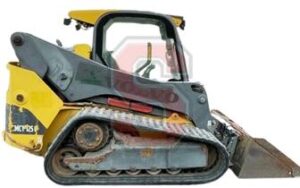

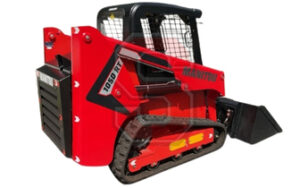
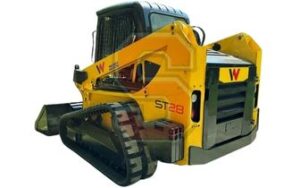
Pin height ROC horsepower hydraulic flow and cooling
Pin height is the ground to bucket hinge center at full lift. A tall pin lets you clear box sides and hopper lips without half-dumps. Dump reach at height is the forward distance from the front of the track or tire to the cutting edge when dumped. That number decides if material lands inside the box instead of painting the wall. Rated operating capacity, or ROC, is the lab number that represents half the tipping load on many models. It is a safety proxy and a way to compare loaders with the same test method. Horsepower is the engine’s ability to do work. Gallons per minute and PSI, delivered at the coupler, is the hydraulic ability to do work with attachments. Cooling capacity is the right to keep doing either of those things after ten minutes in 95 degree weather without derating.
- Largest skid steer numbers often live north of 140 inches hinge pin height and 3500 to 4000 pounds ROC. If you regularly stack or load tall sides, chase real dump clearance and reach at your actual dump angle.
- Most powerful skid steer or the most powerful compact track loader claims settle around triple digit horsepower with high flow pushing into the mid or high 30s GPM and system pressures in the 3500 PSI neighborhood. Your attachment spec decides how much of that you truly need.
- Cooling packages make or break high flow days. A machine with a smaller cooler will run the first pass hard and then spend the next thirty minutes protecting itself while your cut quality fades.
Brand leaders in size and power
Different brands fight for different crowns. Some aim for the biggest bobcat skid steer bragging slot inside their own lineup. Others chase the case big skid steer customer with high ROC and counterweight options. What matters is how the top tier machines behave with a real bucket at full lift and a real attachment under heat. If you are comparing brand leaders, frame the test the same way on your lot with your tools, not at a show.

Look at each brand’s largest frame size in tires and tracks. Ask for the high lift arm option if they offer it. Match a light material bucket for height tests and a general purpose bucket for stability tests. Bring your heaviest attachment and a forestry door if that is how you will run it. Brands shift these crowns with new releases, but the evaluation stays the same. The biggest skid steer from one label may look gorgeous on paper and then hit relief early with your planer. The strongest skid steer from another may run a heavier cooler and shave a few GPM on the spec page but keep cut quality constant for an hour. Data on paper helps. Data on your route wins.
Big truck loading and stacking focus
Chase hinge pin height and dump reach at height, then confirm visibility at full lift. If an operator cannot see the far wall of the bed, you will dent rails and slow cycles. High lift arms and light material buckets are common in this play.
Attachment power focus
Chase high flow with honest GPM at the coupler and a cooler that holds temperature. Forestry packages with reversing fans and debris screens make the difference between twenty minutes of cutting and a whole day of work.
ROC and carry focus
Chase rated operating capacity backed by balance on broken lots. The machine should feel planted at carry height with a heaped bucket and stop without bouncing when you roll into a pile.
Largest track loader and compact track loader class
When people say largest track skid steer, they generally mean compact track loaders with the biggest frames, the most travel stability at speed, and the most hydraulic muscle for power-hungry implements. Tracks extend the wheelbase and drop ground pressure, which keeps the machine calm when traveling with heavy loads and protects fragile surfaces. Largest compact track loader models often combine long undercarriages with high flow and aggressive cooling packages. They are built for high duty cycle attachments that punish smaller frames and for carry on soft ground where tires would rut, hop, or spin.
- Track loaders carry farther on soft ground with fewer ruts. If your routes include lawns or subbase, a large frame track machine can save rework.
- Track width and lug design change behavior. Wider tracks help flotation on mud and snow, while taller lugs help bite on loose stone. A big loader can still feel nervous with the wrong track in hot weather if the lugs smear instead of grabbing.
- The largest compact track loader candidates often ship with debris screens, reversing fans, and thicker belly pans. Those details stop downtime before it starts on job types that push heat and dust.
Global bragging rights and context
Questions like largest skid steer in the world or biggest skid steer made sound fun, but they can be slippery. Some models get limited runs for specific markets. Some brands count prototype or forestry edition machines. Others measure height without a bucket or list flow numbers without noting that a third valve must be added to reach them. If you want bragging rights, you can always find a number to wave at a barbecue. If you want productivity, build a short list by the measurements that matter and put machines in the same test on the same day with the same tools.
Who makes the biggest skid steer is less important than which machine clears your tallest truck without spillage, spins your attachment at spec speed under heat, and keeps operators fresh behind a cab that stays quiet and cool.
Do you really need 100 horsepower class?
That depends on work mix, not brand loyalty. If your attachments demand high flow and the cut quality shows it when RPM drops, then yes. If your daily work is pallets, GP bucket moves, and light landscape tasks, a mid frame might outrun a heavy large frame simply because it turns faster in tight lots and drinks less fuel. The 100 hp skid steer tier is a tool to buy when the job truly needs it. The payment and the trailer do not care if you only use half the capacity.
Think about who will operate it. High power machines magnify bad habits. If a new hire yanks sticks and dives into piles at full speed with a heavy bucket, the repairs will find you. A big loader with smooth, programmable EH controls and calm hydraulics is a joy. A big loader with a rough setup in a tight yard is a headache. Size honest is size smart.
Fuel tires tracks and cost realities at the top end
Top end power comes with top end costs. Big engines burn more fuel. Larger frames eat tires faster on hot asphalt and need pricier tracks when lugs chunk. High flow hours load hydraulic oil and filters harder and demand cleaner coolers and tighter maintenance. Insurance and transport rise because the machine and its attachments pull a heavier trailer. None of this is a reason to avoid the class. It is a reason to measure every cost against the production gain you actually bank.
- Fuel planning is not just gallons per hour. It is gallons per job. If a large track loader takes two passes where a mid frame needs three, the bigger engine can still win on total gallons because you stop sooner.
- Tires versus tracks is not a religion. Tires sprint on clean pavement and are cheaper to replace. Tracks float and carry on soft ground and keep operators calm at speed. The most powerful skid steer on tires can still beat a big track loader in a tight city lot with short pushes.
- Downtime costs more as machine size rises because attachments are bigger and crews schedule around the heavier loader. The largest compact track loader in your yard should be the best maintained unit you own.
Attachments that actually need big hydraulics
Most powerful skid steer loader claims make sense when an attachment demands torque and tip speed at the same time. Forestry cutters and rotary mulchers need both to keep chip size and cut face clean. Cold planers need stable RPM to avoid chatter and ridges. Snow blowers for deep, heavy snow need high flow to move volume. Drum-style stump grinders like torque more than RPM and heat up oil fast. Any of these tools will throttle a mid flow machine and make the operator chase productivity that never shows up. This is where the most powerful compact track loader class earns its keep.

- Forestry cutter heads will tell on a weak cooler in minutes. Watch case drain and return temps and log pressure drop across the coupler under load.

- Cold planers publish GPM and RPM ranges. If your machine only kisses the bottom of those ranges in the yard, it will fall short on rough asphalt in the afternoon.


- High flow snow blowers benefit from steady flow at the coupler more than peak horsepower. If the machine derates when the fan reverses, your throw distance dies and you just bought an angry shovel.

Stability visibility and stopping near the top of the arc
Big numbers encourage risky habits. When you put a tall light material bucket on the strongest skid steer in your fleet and send it to a rutted yard, the temptation is to carry high and fast to show off speed. That is how rails get kissed and cabs get showered. Proper setup and habits matter more as size and speed increase. Visibility at height needs clean glass, a good wiper sweep, and clear markers on bucket corners. Stopping must be smooth ten feet before the dump. Roll forward just enough to clear the wall. Roll back before lowering. Those tiny steps remove the scary moments that give large machines a bad name with new operators.
- Counterweights are a tool, not a fix. They do not improve dump reach or rollback and they will not fix poor approach habits.
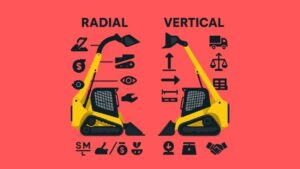
- Vertical lift helps at height. Radial lift often feels smoother for digging and back dragging. If your day is both, tests beat opinions every time.
- Match bucket geometry to the dump height problem. A taller back can keep material off the cab and preserve dump clearance on tall sides.
Hydraulic flow cooling and relief strategies that hold power
High flow numbers do not matter if the machine cannot keep oil cool and pressure stable. Relief settings protect the system, but they also cut peak performance when heat climbs. The biggest track loader or the most powerful skid steer tiers usually ship with larger coolers, reversing fans, and more thoughtful shrouding that forces air through the core instead of around it. Those details keep case drain reasonable and protect seals in motors. The payoff is simple. An attachment that holds speed and torque under heat makes clean cuts and keeps operators fresh.
- Clean coolers every day in dust and chips. A handheld leaf blower in the yard saves pumps and motors in the field.
- Flat face couplers should be high quality and sized for flow. Undersized couplers add pressure drop and create heat you do not need.
- Relief set too low for the head you run will make the tool sound angry and tear instead of cut. Log pressures during a demo to know, not guess.
Moving big iron trailers tie downs and site access
Large frame machines demand better trailers and stricter habits. The heaviest skid steer or largest track skid steer candidates move the tongue weight needle and ask more from brakes. Measure and write the numbers on the trailer deck. Place attachments on the deck with protection under couplers and hoses so nothing gets crushed when you bounce across potholes. Verify gate widths and turning room before you send a large track loader into a courtyard. Saving a pass is worthless if the machine cannot make the corner without tearing the subbase.
- Use four point securement and match chain binder working load limits to machine weight. Replace chains that drag.
- Balance the deck with the heaviest attachment forward against a chock. Verify tongue weight with a scale so the truck steers true.
- Carry a debris screen and a spare coupler kit in the toolbox. These are the two parts that save days during storm weeks.
Fast checklist for choosing the biggest machine you can afford to run
Define the win
Do you need to reduce passes, clear higher sides, or run a specific attachment without slowdown? Rank those in order before any demo.
Measure your tall wall
Mark the highest truck or hopper you load. Test dump reach at height with your bucket and your dump angle. If you do not clear the mark cleanly, move a size up or choose a different bucket profile.
Attach the real tool
Run your mulcher, planer, or blower. Log GPM and PSI at the coupler if the machine allows it. If speed falls over ten minutes, cooling is the limiter, not the spec sheet.
Track total job time
Time six cycles with each candidate from the same pile to the same truck. The fastest loader on paper can still lose to a calmer machine that spills less and stops smooth.
Account for transport
Check GVWR, brakes, and tongue weight. If you must buy a trailer and a truck to move one machine, put that cost next to the production gain.
Plan the first year
Price edges, filters, tracks or tires, and insurance. Big loaders pay out when you schedule them on jobs that need them, not as a taxi in the yard.


What is the largest bobcat skid steer?
When people ask for the “largest” skid steer or compact track loader, they usually care about three things:
- Rated operating capacity (how much it can safely lift and carry)
- Horsepower and hydraulic flow (what kind of attachments it can run)
- Machine size and weight (stability, reach and transport needs)
Below is a brand by brand overview of the current heavy hitters, split into wheeled skid steers and compact track loaders (CTLs) where possible.
These are the machines that sit at the top of each manufacturer’s lineup in terms of power and capacity.
Bobcat: S86 Skid Steer And T86 Compact Track Loader
Bobcat positions the Bobcat S86 as the most powerful skid steer loader it has ever built.
It uses a 105 hp diesel engine and delivers around 3,400 lb rated operating capacity at ISO, with optional high flow and super flow hydraulic packages that significantly increase hydraulic horsepower for demanding attachments.
- Bobcat S86 (skid steer)
Approx. 105 hp, about 3,400 lb ROC, operating weight just under 9,800 lb and optional high flow and super flow hydraulics for things like cold planers, mulchers and big snow blowers. - Bobcat T86 (CTL)
Same 105 hp class engine on tracks, with ROC in the 3,800 lb range and operating weight around 12,400 lb, plus hydraulic options that can reach roughly 42 gpm at high pressure, making it Bobcat’s most powerful CTL to date.
In practice, the S86 suits contractors who want road speed and lower owning cost, while the T86 is the choice when you need traction, flotation and maximum hydraulic muscle for land clearing or heavy grading.
Caterpillar: 272D3 XE Skid Steer And 285 XE Compact Track Loader
On the wheeled side, Caterpillar’s 272D3 XE is the large frame skid steer with a 110 hp class engine and a high output hydraulic system.
Cat lists a rated operating capacity of about 3,700 lb at 50 percent of tipping load, and the XE hydraulic package delivers high flow and high pressure for demanding work tools.
In the CTL category, the new Cat 285 XE is the big dog in Cat’s track loader lineup, with around 121 hp, more than 4,500 lb ROC and an XE hydraulic system that provides the highest flow and pressure of any Cat CTL, giving very high hydraulic horsepower to run power hungry attachments.
- Cat 272D3 XE (skid steer)
Approx. 110 hp, about 3,700 lb ROC, high flow XPS hydraulics around the mid 30 gpm range at over 4,000 psi and an operating weight close to 9,600 lb, built for maximum work tool productivity. - Cat 285 XE (CTL)
Around 121 hp, roughly 4,520 lb ROC and up to about 40 gpm at increased hydraulic pressure in XE trim, which puts it in the top tier of the market for hydraulic horsepower in a CTL.
If your priority is pure production with high flow tools like planers, mulchers and heavy sweepers, both the 272D3 XE and 285 XE are engineered around hydraulic performance rather than just static lift numbers.
John Deere: 334 P Tier Skid Steer And 335 P Tier Compact Track Loader
John Deere’s new P Tier machines replace the older G Series at the top of the line.
John Deere 334P Tier is the large frame skid steer, and Deere markets it with roughly 118 hp and about 4,000 lb rated operating capacity, plus a new pressure compensated load sensing (PCLS) hydraulic system for better multifunction and fuel efficiency.
The JD 335P Tier compact track loader shares the same power class, again around 118 hp, with ROC in the 4,025 lb range and operating weight around 12,300 lb, positioned as the large frame CTL built for high flow attachments and grade control technology.
- John Deere 334P Tier (skid steer)
Large frame vertical lift skid steer with about 118 hp, 4,000 lb ROC and a sealed, pressurized one piece cab that focuses heavily on operator comfort and integrated electronics like a touchscreen display and slope indication. - John Deere 335P Tier (CTL)
Tracks instead of wheels, similar horsepower, ROC around 4,025 lb and operating weight between roughly 12,300 and over 13,500 lb depending on blade options, with SmartGrade and high flow options targeted at precision grading and heavy attachment use.
These Deere machines are often chosen where technology integration matters as much as raw lift numbers, for example on contractors that rely on grade control and telematics across a mixed fleet.
CASE: SV340B Skid Steer And TV620B Compact Track Loader
CASE describes the Case SV340B as the largest and most powerful skid steer in its lineup.
It delivers around 90 hp with a rated operating capacity of 3,400 lb at 50 percent of tipping load, aimed at heavy pallet handling, fast earthmoving and high demand attachments.
On the CTL side, the Case TV620B sits in a different league.
CASE markets it as an industry leading machine with about 6,200 lb ROC at 50 percent tipping and breakout forces over 12,000 lb, making it one of the heaviest duty CTLs available from any manufacturer.
- CASE SV340B (skid steer)
Approx. 90 hp, 3,400 lb ROC and operating weight around 9,100 lb, with optional high flow hydraulics and a wide cab that aims for comfort on long days with heavy attachments. - CASE TV620B (CTL)
Around 114 hp, rated operating capacity about 6,200 lb, operating weight near 16,000 lb, and very high bucket and lift breakout forces, positioned as a do it all CTL for heavy construction, road work and land clearing.
For a contractor who wants a true “super CTL” with massive lift numbers and the ability to replace a small dozer and wheel loader on some jobs, the TV620B is usually in the conversation.
Kubota: SSV75 Skid Steer And SVL97 2 Compact Track Loader
Kubota’s wheeled skid steer range is smaller than some competitors, but within that line the Kubota SSV75 is the large frame model.
It uses a turbocharged Kubota diesel around the mid 70 hp mark, with operating weight just over 8,400 lb and a tipping load of roughly 5,380 lb, giving it serious capability in a compact footprint.
On tracks, the Kubota SVL97-2 is Kubota’s biggest and strongest compact track loader as of recent model years.
It runs a 96.4 hp engine, with rated operating capacity around 3,200 lb at 50 percent tipping load and operating weight in the 11,000 lb range, plus a high flow hydraulic option for heavy attachments.
- Kubota SSV75 (skid steer)
About 74 hp, more than 5,300 lb tipping load and an operating weight in the mid 8,000 lb range, positioned as a heavy duty general purpose skid steer for agriculture, construction and material handling. - Kubota SVL97 2 (CTL)
Roughly 96 hp, about 3,200 lb ROC at 50 percent tipping, breakout force in the mid 3,600 kg range and high flow hydraulics, marketed as the flagship CTL that can act like a small dozer on tough ground.
Kubota’s SVL machines are especially popular in markets where reliability, dealer support and resale value are major purchase drivers and where contractors like to keep their fleets mostly orange.
Takeuchi: TL12V2 And TL12R2 Compact Track Loaders
Takeuchi does not currently focus on wheeled skid steers, instead its brand is closely tied to compact track loaders.
At the top of that line sit two big 12 series machines, the Takeuchi TL12V2 and TL12R2, both built around a 111 hp Kubota diesel and a heavy duty undercarriage.
The Takeuchi TL12V2 is the vertical lift version and is described by Takeuchi as the largest and most capable track loader in its lineup, with best in class rated operating capacity, an enlarged cab and optional high flow hydraulics up to about 40 gpm.
Takeuchi TL12R2 uses a radial lift arrangement, but shares the same 112 hp engine and heavy chassis, with rated operating capacity in the 2,900 to 3,000 lb range at 35 percent tipping and around 4,300 lb at 50 percent tipping, depending on configuration.
- Takeuchi TL12V2 (CTL)
Approx. 111 hp, ROC around 5,870 lb at 50 percent tipping, operating weight above 13,000 lb and optional high flow up to roughly 40 gpm, marketed as the largest and most capable track loader in the Takeuchi range. - Takeuchi TL12R2 (CTL)
Around 111 hp again, ROC just under 3,000 lb at 35 percent tipping, tipping load around 8,600 to 9,400 lb and operating weight roughly 12,300 to 12,600 lb, with a radial lift boom that favors grading and mid height work.
Contractors who like Takeuchi are usually chasing strong dig and push performance, all steel construction and an undercarriage that is built around tough, long term CTL use rather than just light duty landscaping.
FAQ
What makes the largest skid steer useful beyond bragging rights?
The ability to clear taller sides without ramps, carry more in fewer passes, and power high flow attachments at spec speed under heat. If those win conditions are not on your jobs, a mid frame may be the better buy.
How do I compare the biggest skid steer from two brands fairly?
Use the same bucket and attachment on the same day on the same lot. Mark reach and clearance at height, time repeated cycles, and log hydraulic temps. The winner will be obvious in fifteen minutes.
Is the most powerful skid steer always a track machine?
No. Some tire models match horsepower and flow with less weight and faster turns on clean pavement. Track loaders win on soft ground and carry distance, but tires can outrun them in tight city lots.
Who makes the biggest skid steer and does it matter?
Brands rotate that title with new models. What matters is whether the machine you buy clears your highest wall and holds attachment speed all afternoon. Titles do not move material. Specs and cooling do.
Do I really need the largest compact track loader for a forestry head?
Maybe. If your head needs high flow and you work in heat or elevation, the larger cooler and hydraulic margin from a big track loader will pay off. If you only cut small brush in short bursts, a mid frame with a light head can be smarter.
Will a 100 horsepower skid steer replace a small wheel loader?
Sometimes for tight yards and short pushes. For continuous truck loading with high sides, a wheel loader still wins on visibility and dump geometry. Let the site and cycle time decide.
How do I stop spillage at height with a big light material bucket?
Use a taller back bucket, lift smooth, pause before the wall, roll only enough to clear, and train operators to roll back before lowering. Add corner markers for sightline and keep glass clean.
What hidden cost hits hardest on the most powerful compact track loader?
Cooling maintenance. Dirty cores and weak reversing fan habits kill production. Clean daily, check shrouds, and replace bent screens. Oil and filter intervals also arrive faster with high flow hours.
Does the largest track skid steer always need counterweights?
No. Balance is a system of wheelbase, track stance, bucket geometry, and operator habits. Counterweights help, but they are not a cure for poor approach angles or an oversized bucket used on dense material.
What is the quickest way to tell if a big machine is too big for my routes?
If it cannot make turns without tearing subbase, if you need to build ramps at every dump, or if you have to upsize the trailer and truck to move it twice a week, it may not pay its keep on your mix of jobs.